

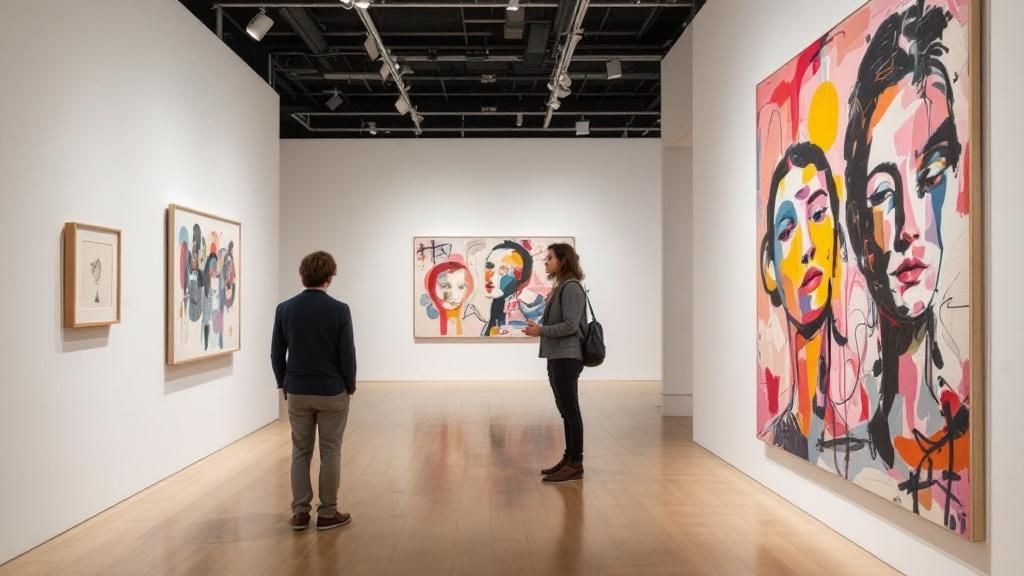
The Turner Prize has functioned as a gauge of modern artistic expression, and this year’s display proves no exception. By presenting works that consciously challenge the lines dividing abstraction and representation, the curators have orchestrated a stimulating provocation to spectators’ expectations about what art can communicate. This article examines how the chosen creators employ unconventional techniques and conceptual frameworks to interrogate our understanding of pictorial communication, ultimately considering whether the traditional distinctions between abstract and representational art hold relevance in the contemporary art world.
Reshaping Conceptual Limits
The Turner Prize exhibition this year actively deconstructs established categories that have traditionally influenced artistic discourse. By showcasing pieces that seamlessly oscillate between abstraction and figuration, the curators prompt viewers to reconsider their assumptions about how we create visual meaning. The exhibition reveals that modern artists increasingly move away from binary categories, instead adopting hybrid methods that examine how we understand and interpret visual information. This curatorial approach encourages audiences to engage more critically with artistic intent and aesthetic experience.
These boundary-pushing works reflect a significant evolution within modern artistic practice towards fluid conceptualization and experiential ambiguity. Rather than adhering to rigid stylistic categories, the showcased creators deploy techniques that intentionally undermine spectator preconceptions. The display demonstrates that abstraction and representation are not mutually exclusive territories but rather locations within a continuous spectrum. This reconceptualisation encourages deeper contemplation about meaning formation through the interaction between artwork, audience perception, and contextual interpretation, profoundly altering critical dialogue.
The Evolution of Visual Language
Visual language has experienced profound transformation throughout the twentieth and twenty-first centuries, especially as artists confronted photography’s threat to representational painting. Modernist movements originally established abstraction as a fundamental shift from mimetic traditions, establishing ostensibly impassable conceptual divides. However, present-day creators increasingly recognise these earlier divisions as constructed boundaries. The exhibition illustrates how visual language evolves organically, integrating varied sources and methodologies that move past traditional categorical boundaries, reflecting our increasingly complex visual culture.
Contemporary artists now combine elements from abstraction, representation, and conceptual frameworks with unprecedented sophistication. This integrative approach recognises that artistic expression operates through multivalent channels simultaneously. The Turner Prize exhibition showcases how artists employ tone, structure, arrangement, and symbolic reference to create complex significations that resist singular interpretation. This evolution demonstrates that artistic language has matured beyond ideological rigidity, favouring instead a nuanced vocabulary capable of expressing the complexities inherent in contemporary experience and perception.
Contemporary Views
Today’s artists engage with abstraction with significantly varied conceptual approaches than their earlier counterparts, shaped by postmodern discourse, digital environments, and international creative traditions. Rather than seeking abstraction in its purest form as an conceptual destination, modern artists treat abstract elements as vehicles for communication within broader conceptual strategies. The display features works wherein geometric shapes, gestural elements, and colour relationships sit alongside representational imagery and textual elements. This multi-faceted approach reflects current perspectives that visual meaning develops through intricate relationships rather than through singular stylistic commitments or aesthetic doctrines.
The chosen artists display remarkable facility in engaging with multiple visual registers simultaneously, producing works that repay sustained contemplation and analytical openness. Their work indicates that contemporary art operates more and more as a dialogue between artist, artwork, and viewer, rather than as a unidirectional statement. By incorporating varied aesthetic vocabularies, these artists recognise that meaning-making in contemporary culture requires careful engagement of competing aesthetic systems. The exhibition finally suggests that modern critical understanding requires viewers relinquish fixed categorical approaches, embracing instead the generative uncertainty that characterises advanced creative work.
Public Response and Community Dialogue
The exhibition has prompted considerable conversation amongst art critics and academics, with perspectives spanning from strong approval to careful reservations. Classical advocates have questioned whether the merging of abstract and figurative distinctions amounts to authentic advancement or just artistic uncertainty. In contrast, progressive voices have praised the exhibition organisers for disrupting rigid classifications that no longer reflect contemporary artistic practice. This range of viewpoints demonstrates the exhibition’s role as a impetus for serious dialogue within the art world and beyond.
Public participation in the exhibition has surpassed projections, drawing varied visitor groups beyond the established art-world circles. Social media discourse reveals that visitors are actively grappling with the works’ conceptual underpinnings, sharing interpretations and challenging alternative interpretations. Museums have noted higher visitor numbers and longer engagement periods, demonstrating that patrons are deeply interested in grasping artistic purpose. This organic engagement shows that modern artistic practice can resonate powerfully with the wider audience when given appropriate interpretive guidance and conceptual clarity.
The exhibition’s influence goes further than direct assessment by critics, possibly influencing forthcoming curatorial approaches and artistic direction within institutional structures. New artists have identified the show as a pivotal moment, affirming experimental practices that synthesise the abstract and the representational. Learning institutions are beginning incorporating the themes from the exhibition in their teaching programmes, recognizing its educational value. As discussions continue to evolve, the Turner Prize exhibition appears set to take a prominent role in modern art history, reframing dialogue about artistic classification and creative potential.
